How AI Image Generators Work
Diffusion: turning noise into pictures. Many AI image generators use diffusion: they learn to remove noise step by step until a picture appears that matches your text prompt.
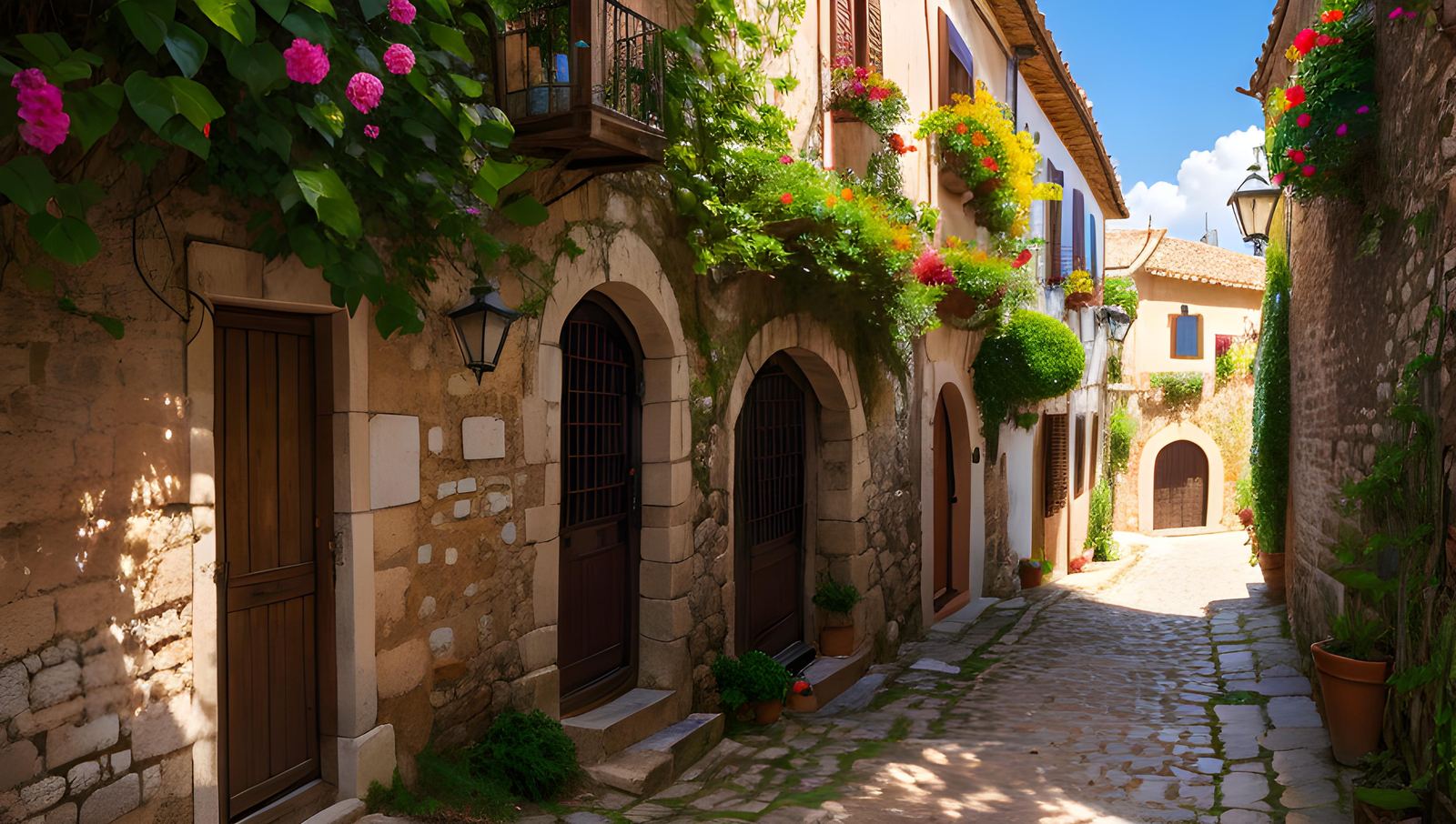
An image made with Stable Diffusion: Stable Diffusion/Tullius Detritus, Public domain
Start with static
Imagine taking a photo and adding a little random noise, like TV static, then a little more, over and over until nothing is left but static. A diffusion model learns to run that film backward. Shown a noisy image, it predicts what noise was added so it can be removed, revealing a slightly cleaner picture.
To generate something new, the model starts from pure random static and repeats that cleanup many times. With each step, rough shapes appear, then colors, then fine details. The number of steps is a setting in many tools, and more steps usually means more detail up to a point.
Video: But how do AI images and videos actually work? | Guest video by Welch Labs (3Blue1Brown), embedded from YouTube.
Where the words come in
A model that only cleans up noise would produce random pictures. To follow a prompt, the system also uses a text encoder, a network trained on huge numbers of images paired with captions, that turns your words into numbers capturing their meaning. During every denoising step the model is steered toward images that fit that meaning.
Many tools also use a technique called guidance, which compares what the model would draw with and without your prompt and pushes the result further toward the prompt. Turn it too high and images look harsh or overcooked, too low and they ignore your words.
Working in a compressed space
Cleaning up every pixel of a large image is expensive. Latent diffusion, the approach behind Stable Diffusion, released publicly in 2022, first squeezes images into a smaller compressed form, does the denoising there, then expands the result back into full pixels. That made high-quality generation fast enough to run on a good home computer. Newer systems mix diffusion with Transformer networks and extend the same ideas to video.
Using them well and fairly
Image generators are useful for mood boards, concept art, illustrations and quick mockups. They still struggle at times with hands, readable text and exact counts, though each generation improves. Be specific in prompts about subject, style, lighting and composition.
There are real questions to respect. Models are trained on large image collections, and artists have raised concerns about consent and credit. Laws on copyright and AI output differ by country and are still developing. Never use these tools to make deceptive images of real people, and label AI-made images when it matters to your audience.

- arXiv: Denoising Diffusion Probabilistic Models
- Britannica: Stable Diffusion
- Stability AI: Celebrating one year(ish) of Stable Diffusion
- Wikipedia: Stable Diffusion
Facts on this page were checked against these sources.
- An image made with Stable Diffusion: Stable Diffusion/Tullius Detritus, Public domain
- More denoising steps, more detail: Stable Diffusion WebUI - Automatic1111, Public domain
Text written by Strawberry Lemonadai.
← Large Language Models ExplainedGPUs: Why AI Runs on Graphics Chips →